Letters to Numbers Converter

Turn text into code. See exactly how it works.

11 characters
A = 1 · B = 2 · … · Z = 26/ separates words

See the pattern

Each letter has a position.

H8
E5
L12
L12
O15

A–Z only. Case is ignored; whitespace is collapsed. Use / between words when decoding.

Text is converted in your browser.
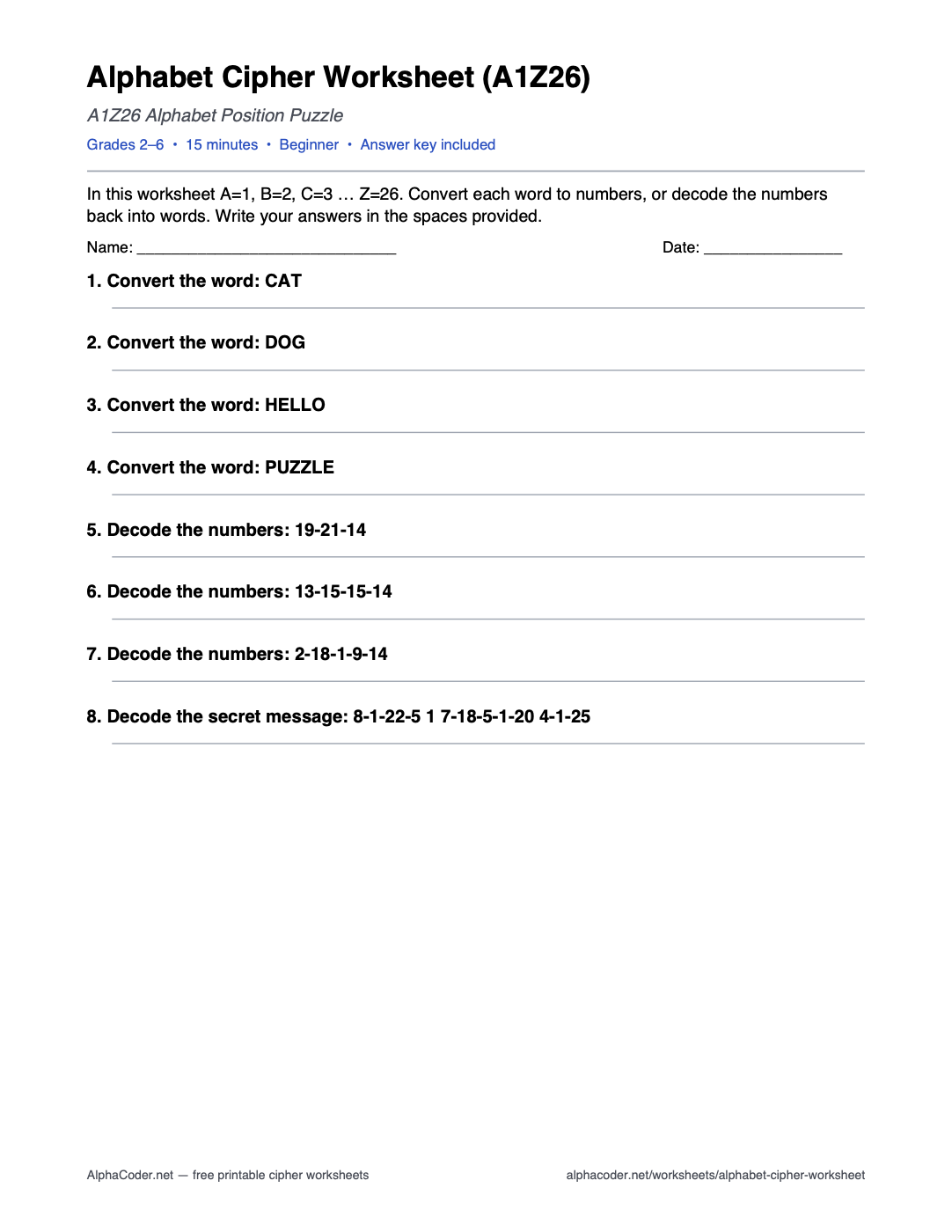
Take it off-screen.

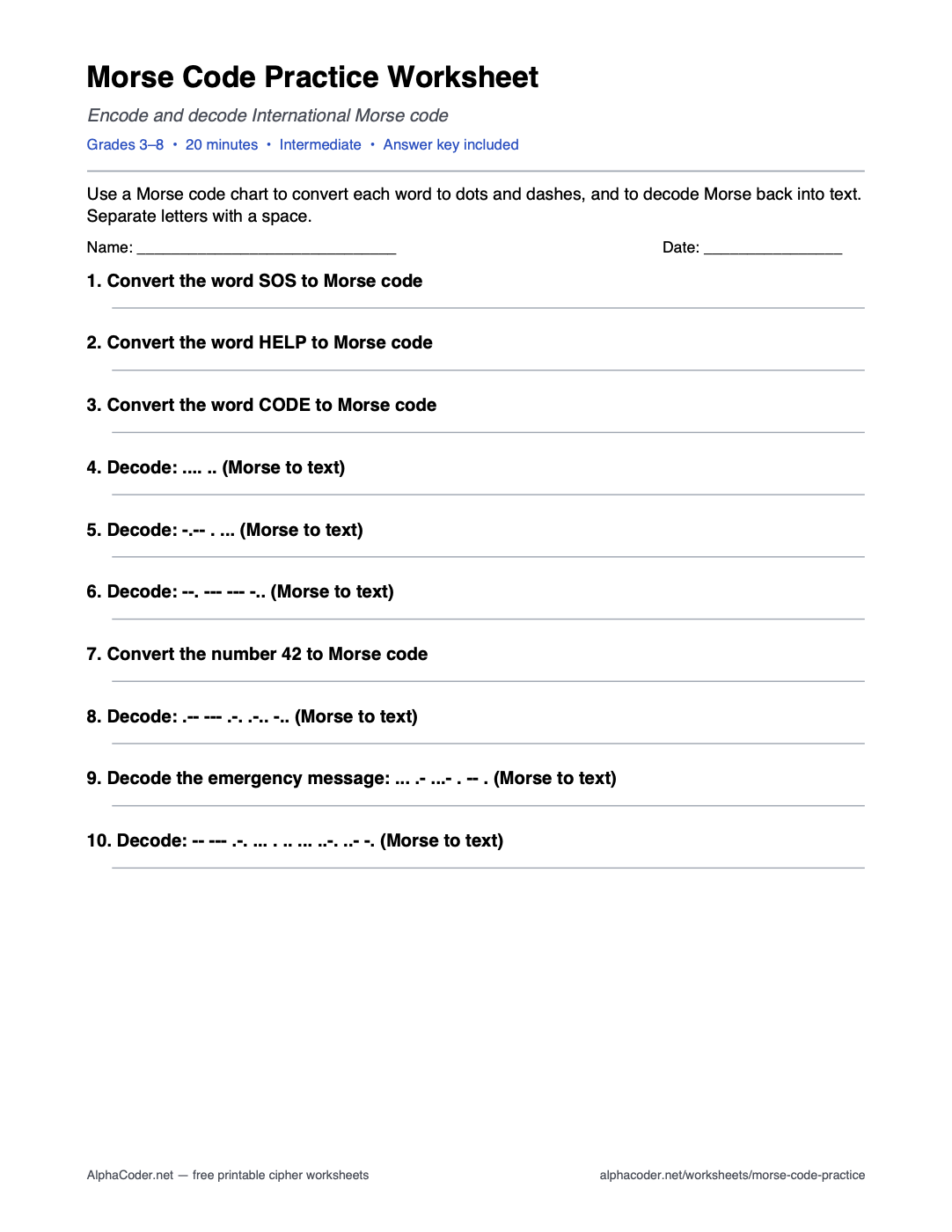
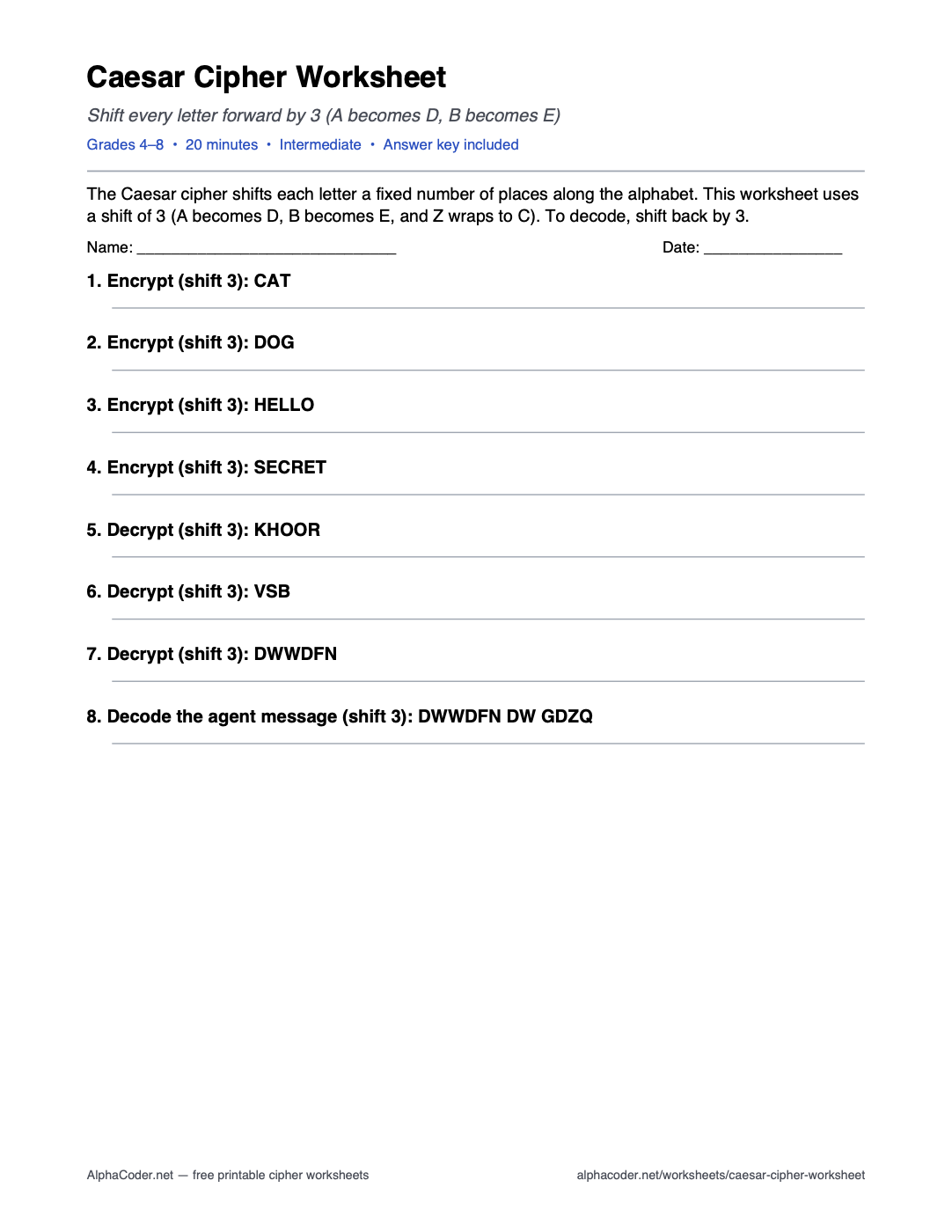
Printable cipher worksheetsBrowse all →

02Find your next tool.

A = 1. Or A = 65?

Same letter. Different encoding systems.

Choose the right format

The same number means different things in different systems. Select the format explicitly; AlphaCoder does not guess.

FormatASpaceScope
A1Z261/English letters, 1–26
A0Z250/English letters, 0–25
ASCII6532Standard ASCII, 0–127
UTF-8 binary0100000100100000Unicode encoded as bytes

Separators make a difference

111 could be 1-1-1 (AAA), 1-11 (AK) or 11-1 (KA). Add separators so the intended letters are clear.

A1Z26 and A0Z25 accept spaces, commas or single hyphens between numbers, and / between words. ASCII accepts spaces or commas. Binary accepts whitespace between eight-bit bytes.

Encoding is not secure encryption

These tools are for representation, puzzles and learning. A simple substitution does not protect confidential information.

Read the complete comparison →

A1Z26 · A–Z

A–Z only. Case is ignored; whitespace is collapsed. Use / between words when decoding.

A1
B2
C3
D4
E5
F6
G7
H8
I9
J10
K11
L12
M13
N14
O15
P16
Q17
R18
S19
T20
U21
V22
W23
X24
Y25
Z26

UTF-8 uses one byte for an English letter; many other characters need several bytes.